World index preview
Worlds: Four Realms to Track
The official material gives us the shape of the world map before it gives us a complete atlas. Use the workbook to record what a player can actually find, and leave uncertain names, routes, and collision points visibly open.
§The four-world frame#
Steam's store copy describes four distinct worlds, each with its own mechanics, characters, and stories. The official news archive adds that the worlds eventually intersect and their puzzle concepts combine.
Until the game supplies stable names and routes, the guide refers to this as the four-world frame rather than assigning invented labels.
§What still needs evidence#
| Record | Preview status |
|---|---|
| World names | Awaiting a stable first-party or playable reference |
| World-specific mechanics | High-level existence confirmed; detailed rules held for review |
| Routes and ordering | Open until the released game can be checked |
| World-collision puzzles | Concept confirmed; individual solutions held for review |
§A four-world workbook#
The slots below are evidence fields, not invented world names. Fill them from an in-game label or a stable first-party reference when one is available.
| Field | What to capture | Why players need it |
|---|---|---|
| Entry context | The displayed world or area name, entrance, and current hero | Lets a player find the same place without a copied route |
| Local rule | One observed interaction plus the board state that produced it | Separates a world rule from a one-off puzzle trick |
| Return point | How the player recognizes the area on a later visit | Supports the official revisit-friendly structure |
| Collision link | The in-game event and changed rule when worlds intersect | Explains progression without spoiling a solution |
§How to map a world without overclaiming#
- Copy the label exactly as the game displays it. If a guide or video uses a different label, keep that label in internal research until the game confirms it.
- Log the first rule you can reproduce, the hero context, and the smallest board state that demonstrates it.
- Mark whether a note is a direct screen observation, an official statement, a player demand signal, or an editorial inference.
- Add a return note when the official revisit structure matters: what changed, what stayed fixed, and what still blocks progress.
- Leave a route order blank when the available evidence only proves that several worlds exist.
§Use the foundational concepts as a comparison grid#
The official FAQ names four foundational puzzle ideas. They help organize observations while the public world names and Demo mappings remain open.
| Concept family | What to look for in a verified board note | Do not assume |
|---|---|---|
| Path creation | What creates a traversable connection and what disappears when it changes | That every path board belongs to the same source game |
| Reflection swap | Which positions are paired and what a swap changes | That a third-party Mirror Isles title proves a Demo world label |
| Beam grid | Beam origin, blockers, targets, and the surrounding cave-like structure | A screenshot alone proving a complete beam route |
| Hero movement or pushing | The active hero, movement constraint, push condition, and exit state | That a role label supplies a full ability list |
§Use environmental cues as evidence, not decoration#
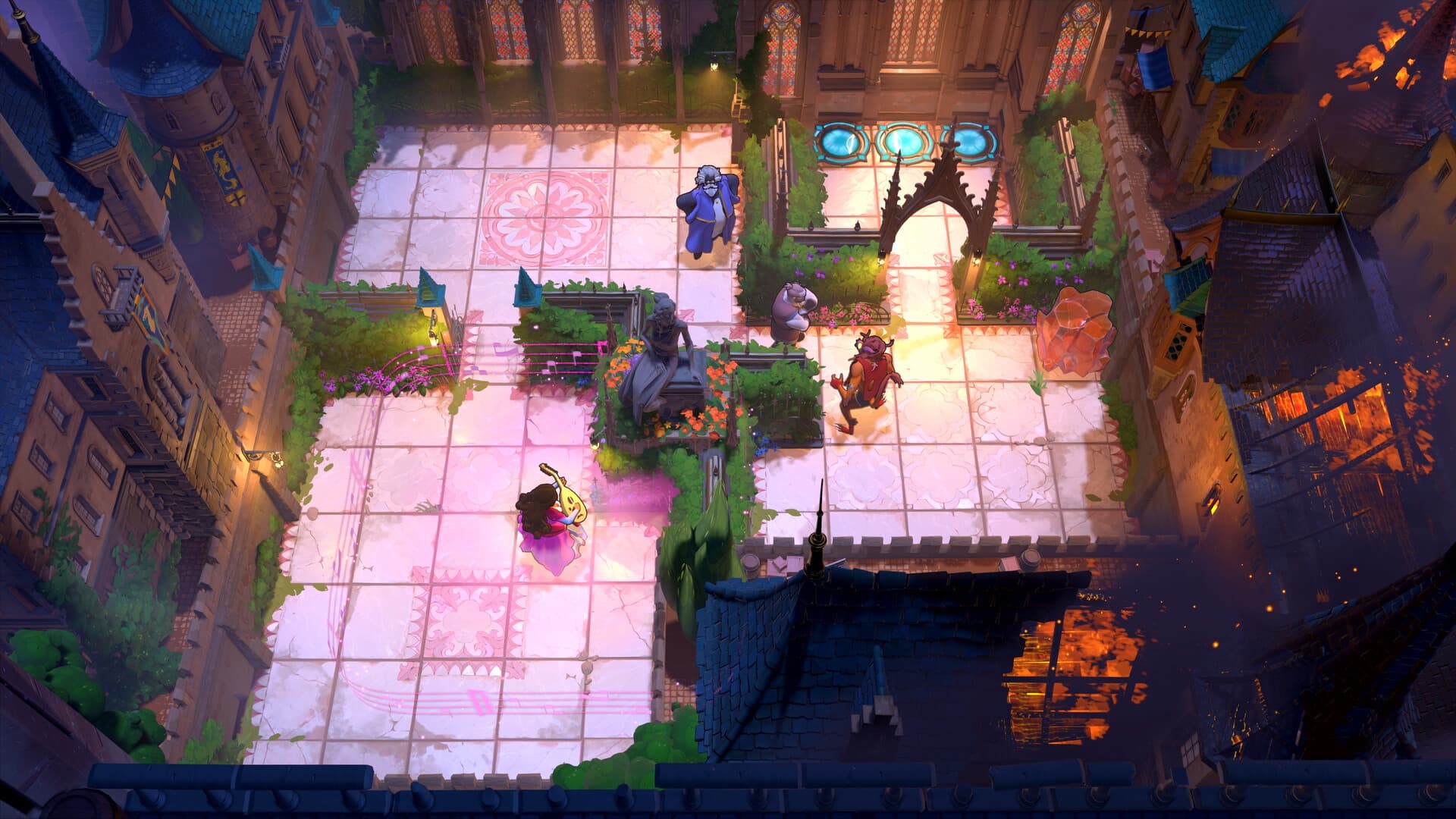
The official art discussion says plants, architecture, rock types, and water can act as subtle signals when worlds physically join. In a future atlas entry, record the cue, where it appears, and the mechanic change that can be reproduced alongside it.
This gives a player a concrete inspection habit: read the grid first, then scan the shell for a world cue, then test whether the cue corresponds to a changed rule. A beautiful backdrop alone is not enough to name a mechanic.
§Explain a collision in layers#
The official news describes heroes meeting, mechanics intertwining, and puzzle concepts combining as worlds intersect. That is enough to explain the design promise, not enough to publish a named collision route.
A spoiler-aware entry should reveal the broad relationship first, then the changed mechanic, then the exact room and sequence only after a playable check. This keeps a player who only wants orientation out of a solution.
§A visual reference, not a route#
The official screenshot below shows a readable play area framed by a larger environment. It helps explain why future records will separate the puzzle grid from surrounding world context.
§How to use this index#
§FAQ#
Can I get a world-by-world walkthrough here?
That page is planned. The public preview keeps the four-world frame and open fields visible while detailed routes await direct verification.
Are the worlds completely separate?
The official material says worlds begin separately and later intersect, with characters and mechanics meeting. The exact progression remains to be documented.
Can a video title establish a world name?
No. A third-party title can be a useful discovery lead, while a public world record needs an in-game label or a stable first-party reference. The current video queue is kept internal for that reason.
§Related pages#
Home
Order of the Sinking Star Guide
A source-tracked pre-release guide to the official facts, demo notes, puzzle systems, heroes, worlds, and launch platforms for Order of the Sinking Star.
GuideArticle
Mechanics: A Practical Puzzle-Reading Method
A source-tracked method for reading Order of the Sinking Star boards, testing one variable at a time, and recording world-collision mechanics without inventing solutions.
Character
Characters: Heroes in the Official Snapshot
A spoiler-light character workbook for the queen, thief, warrior, wizard, and talking boat, with evidence fields for abilities, story layers, and puzzle context.
Route
Release Date and Platforms
The current official release record for Order of the Sinking Star, plus platform-specific planning notes and the limits of the Steam demo carryover statement.